
Wi-Fi Technology: Operation, Multiple Device Handling, And Performance Impact
Wi-Fi technology has revolutionized how we connect to the internet, allowing multiple devices to access a network simultaneously without physical connections. This document explores the underlying mechanisms of Wi-Fi, focusing on how it manages multiple devices and the resulting impact on network performance.

Jun 25, 2024
I. Introduction
Wi-Fi technology has revolutionized how we connect to the internet, allowing multiple devices to access a network simultaneously without physical connections. This document explores the underlying mechanisms of Wi-Fi, focusing on how it manages multiple devices and the resulting impact on network performance.
II. Fundamental Principles Of Wi-Fi Operation
Electromagnetic Wave Transmission
- Uses radio waves in 2.4 GHz and 5 GHz bands
- Data encoded onto these carrier waves
Packet-Based Communication
- Data divided into small packets
- Each packet contains addressing information
MAC Addressing
- Every device has a unique MAC address
- Packets are directed to specific devices using these addresses
Packet Processing
- Devices receive all packets within range
- Check destination MAC address
- Process relevant packets, discard others
III. Multiple Access Technologies
Time Division Multiple Access (TDMA)
- Router switches rapidly between devices
- Each device gets dedicated time slots
Frequency Division Multiple Access (FDMA)
- Different frequency channels assigned to devices
- Allows simultaneous transmission on different frequencies
Code Division Multiple Access (CDMA)
- Data encoded with different codes for each device
- Enables simultaneous transmission on same frequency
Orthogonal Frequency-Division Multiple Access (OFDMA)
- Used in newer Wi-Fi standards (Wi-Fi 6)
- Divides channel into smaller frequency allocations
- Allows true simultaneous transmission to multiple devices
IV. Network Performance And Device Impact
Switching Frequency
- Occurs thousands of times per second
- Typically ranges from 10,000 to 100,000 switches per second
Data Rates
- Modern Wi-Fi standards (802.11ac, Wi-Fi 6) offer multi-gigabit speeds
- Shared among all connected devices
Factors Affecting Performance
- Number of connected devices
- Types of activities (streaming, browsing, etc.)
- Distance from router
- Environmental interference
V. Latency Impact Of Multiple Devices
The following table provides an estimate of additional latency introduced as the number of devices increases. Note that these are approximate values and can vary significantly based on network conditions, router quality, and types of devices connected.
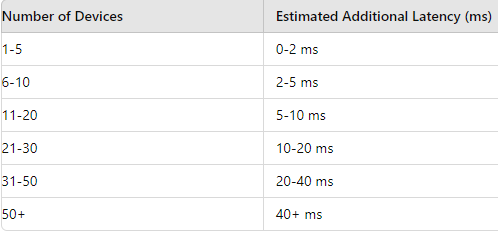
Factors influencing these latency estimates:
- Router processing power
- Wi-Fi standard used (newer standards handle multiple devices more efficiently)
- Types of activities performed by connected devices
- Quality of Service (QoS) settings on the router
VI. Mitigating Performance Impact
Use Of Multiple Bands
- Simultaneous use of 2.4 GHz and 5 GHz bands
- Distributes devices across bands
MU-MIMO Technology
- Multi-User, Multiple-Input, Multiple-Output
- Allows simultaneous communication with multiple devices
Beamforming
- Focuses signal towards specific devices
- Improves signal strength and reduces interference
QoS Settings
- Prioritizes traffic for latency-sensitive applications
VII. Future Developments
Wi-Fi 6 And 6E
- Improved handling of multiple devices
- Use of 6 GHz band in 6E for less congestion
AI-Powered Network Management
- Predictive resource allocation
- Automated optimization for multiple devices
VIII. Conclusion
Wi-Fi technology employs sophisticated methods to handle multiple devices simultaneously, minimizing latency and maintaining performance. While the number of connected devices can impact network performance, modern Wi-Fi standards and technologies are continually evolving to mitigate these effects. Understanding these principles can help in optimizing Wi-Fi networks for better performance in multi-device environments.