Simulation + intelligence / Subject studies
Signals become responses.
Molecules, receptors and feedback. Experimental evidence defines the limits of a mechanism.
Examine the selection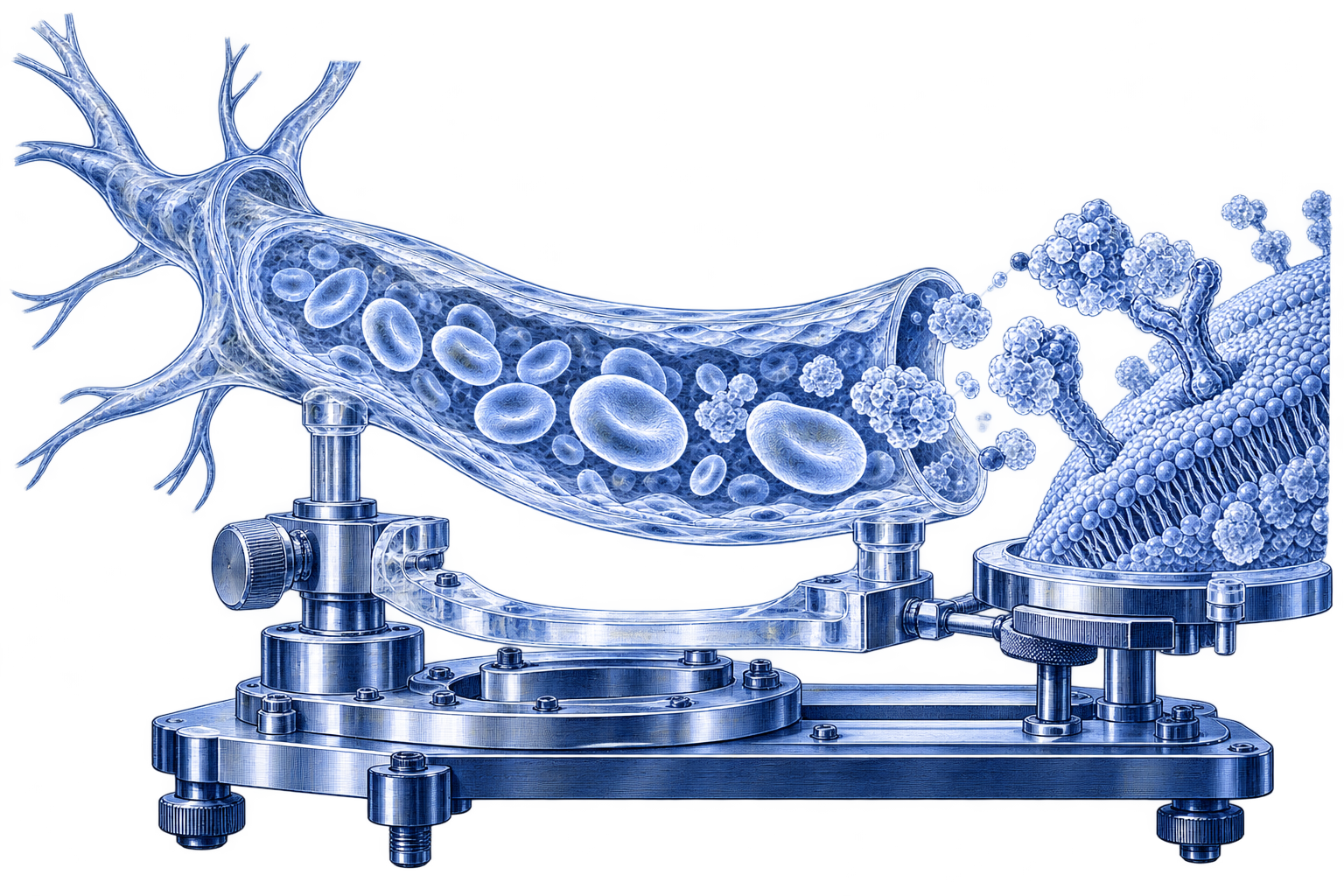
Inside blood: flow, diffusion and selective binding
Read studyEditorial selection / 10 studies
Mechanisms. Evidence. Limits.
02 / Visual analysis
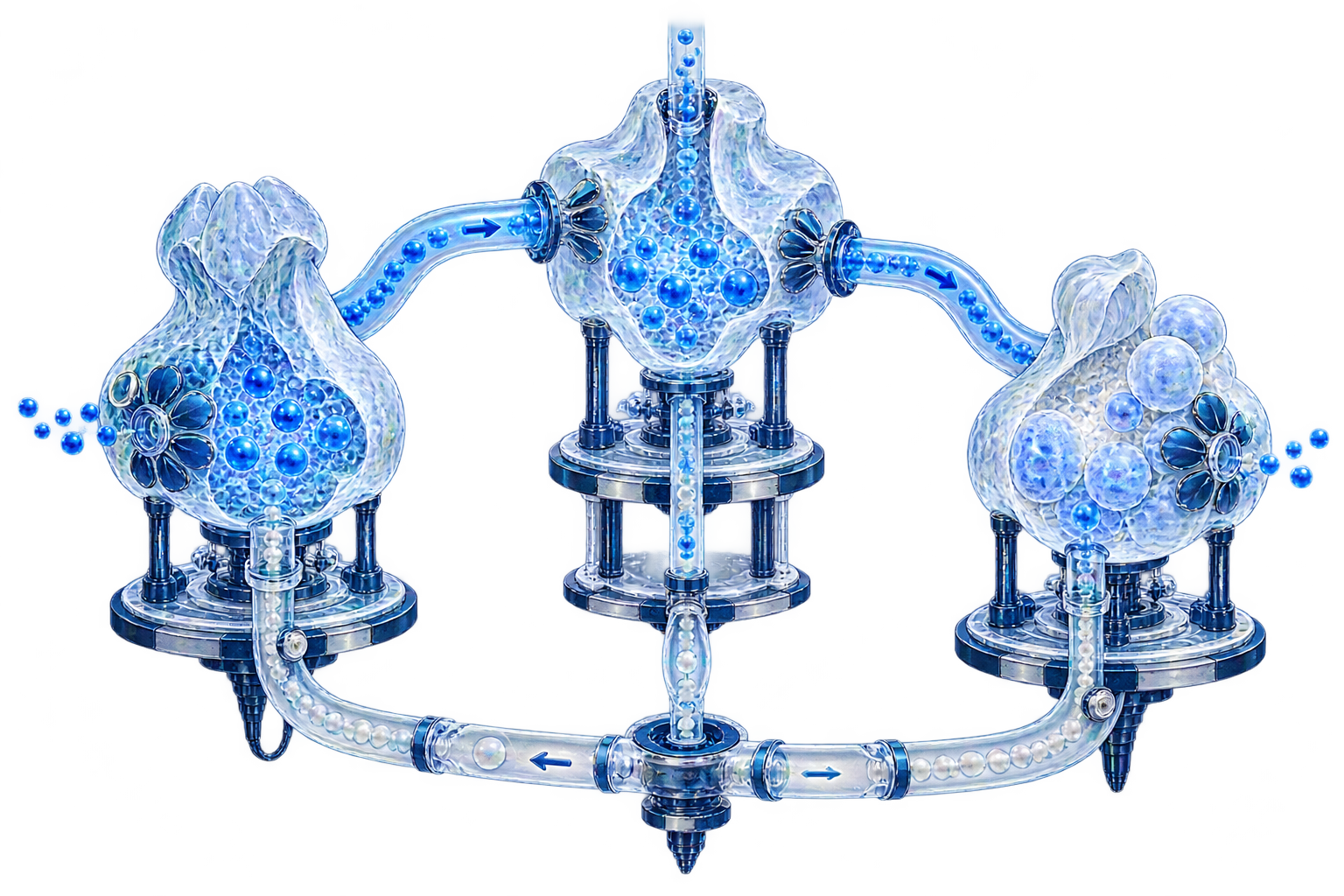
Hormones: signals, receptors and feedback
Hormone families differ in transport and signaling. Receptors, tissue context and feedback determine responses and interpretation.
Read study 5 min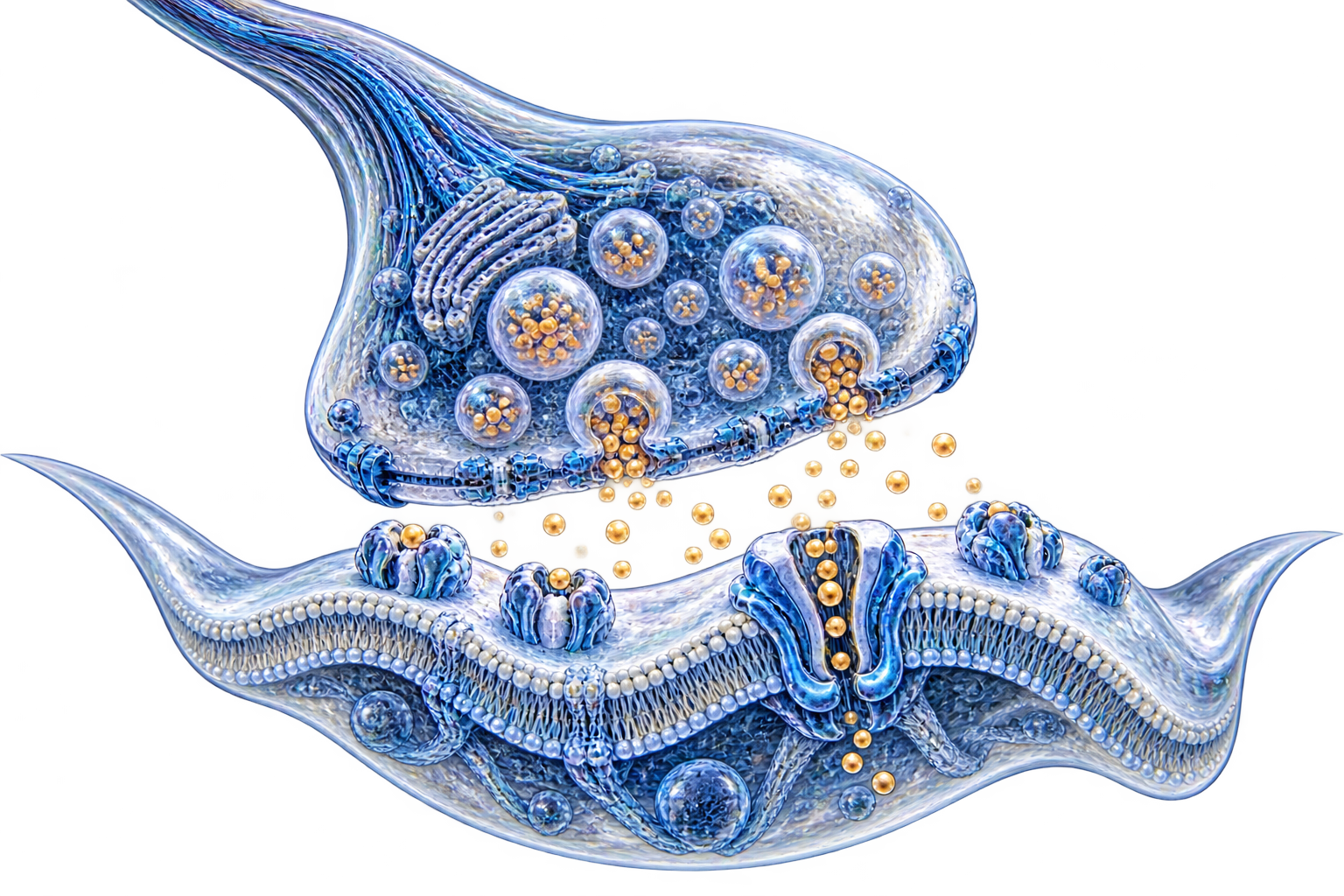
03 / Visual analysis
Dopamine and cocaine: a transporter is not a receptor
Cocaine inhibits neurotransmitter transporters. Its effects on learning, behavior and health extend beyond a single dopamine mechanism.
Read study 5 min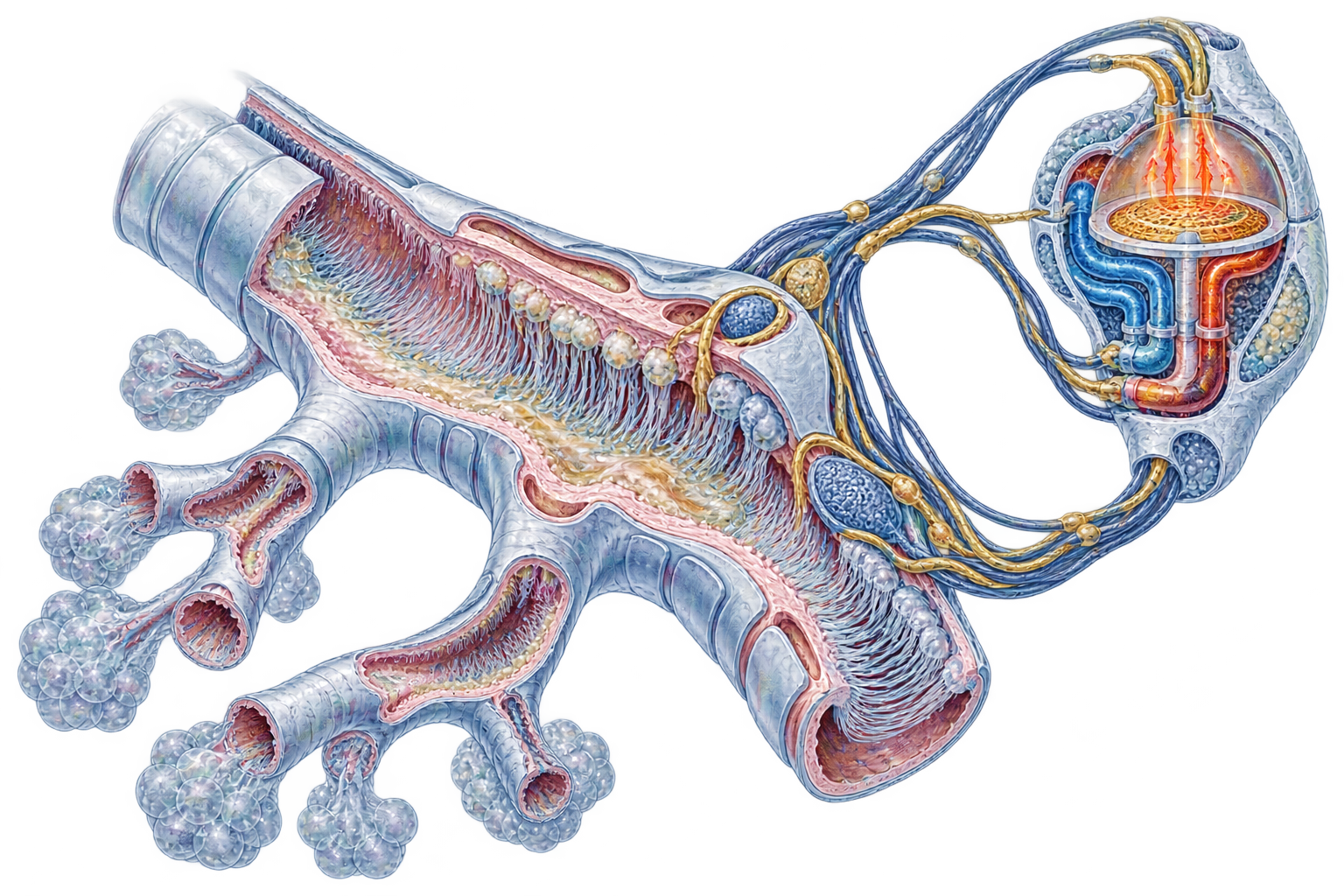
04 / Visual analysis
Cough, sneeze, fever: three responses, many possible causes
Airway reflexes and fever have protective functions but multiple causes. Mechanisms alone do not identify illness cause or severity.
Read study 5 min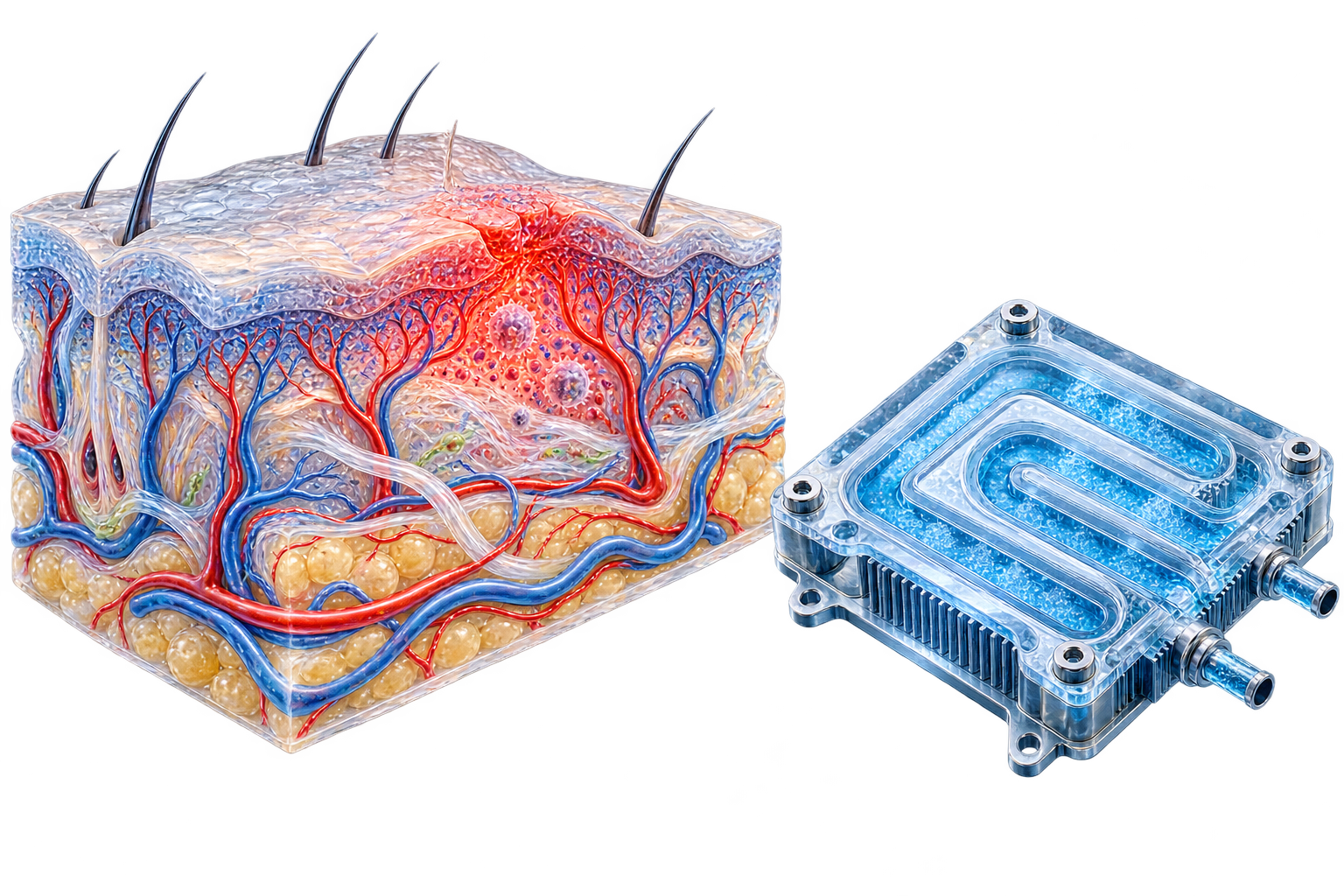
05 / Visual analysis
Ice and injury: pain relief is not proof of faster healing
Cooling can relieve pain. Human evidence for faster tissue regeneration remains uncertain, and trial comparators limit the conclusions.
Read study 5 min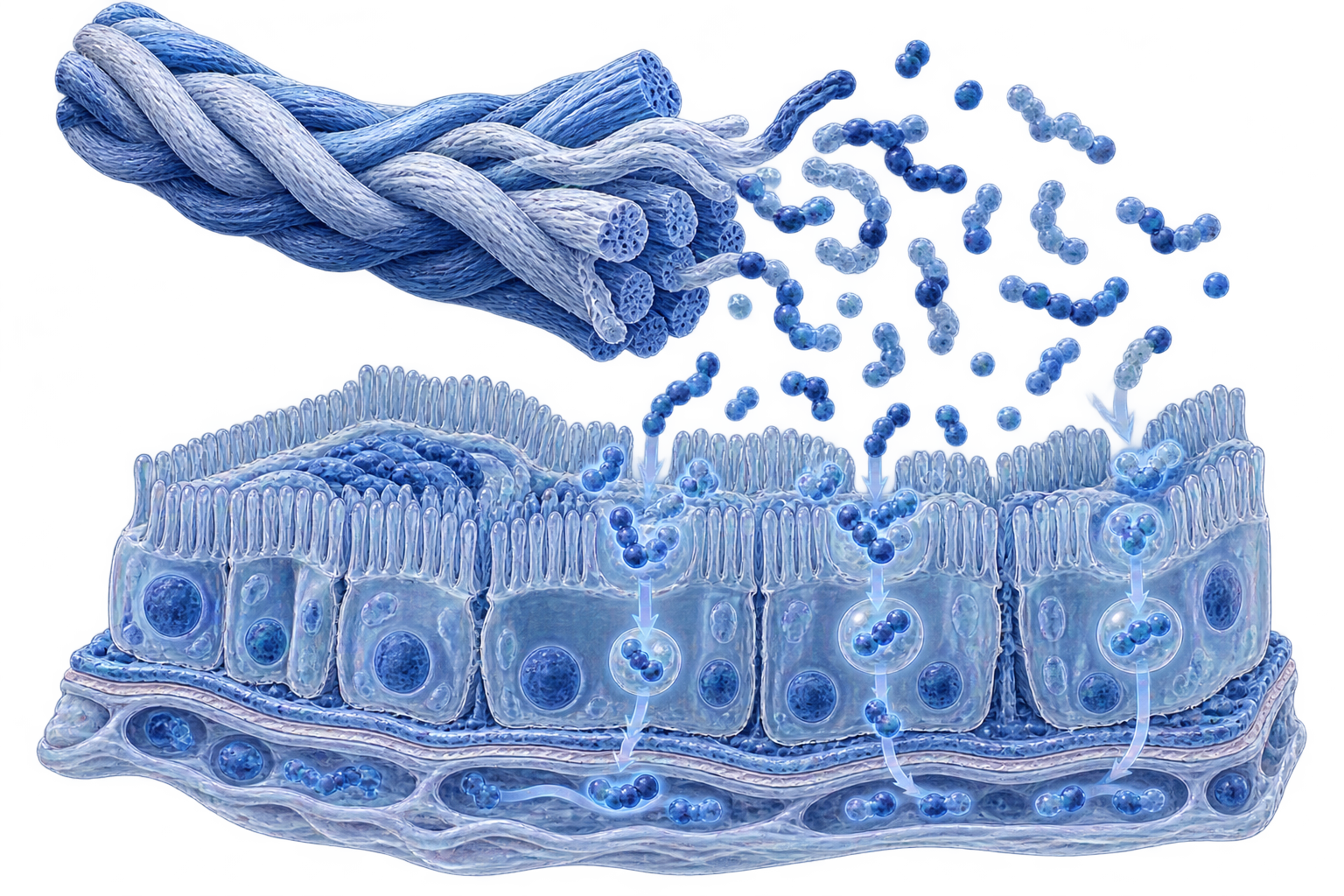
06 / Visual analysis
Collagen supplements: from digestion to uncertain benefit
Collagen-derived peptides can reach blood after ingestion. Human efficacy depends on the formulation, outcome and trial quality.
Read study 5 min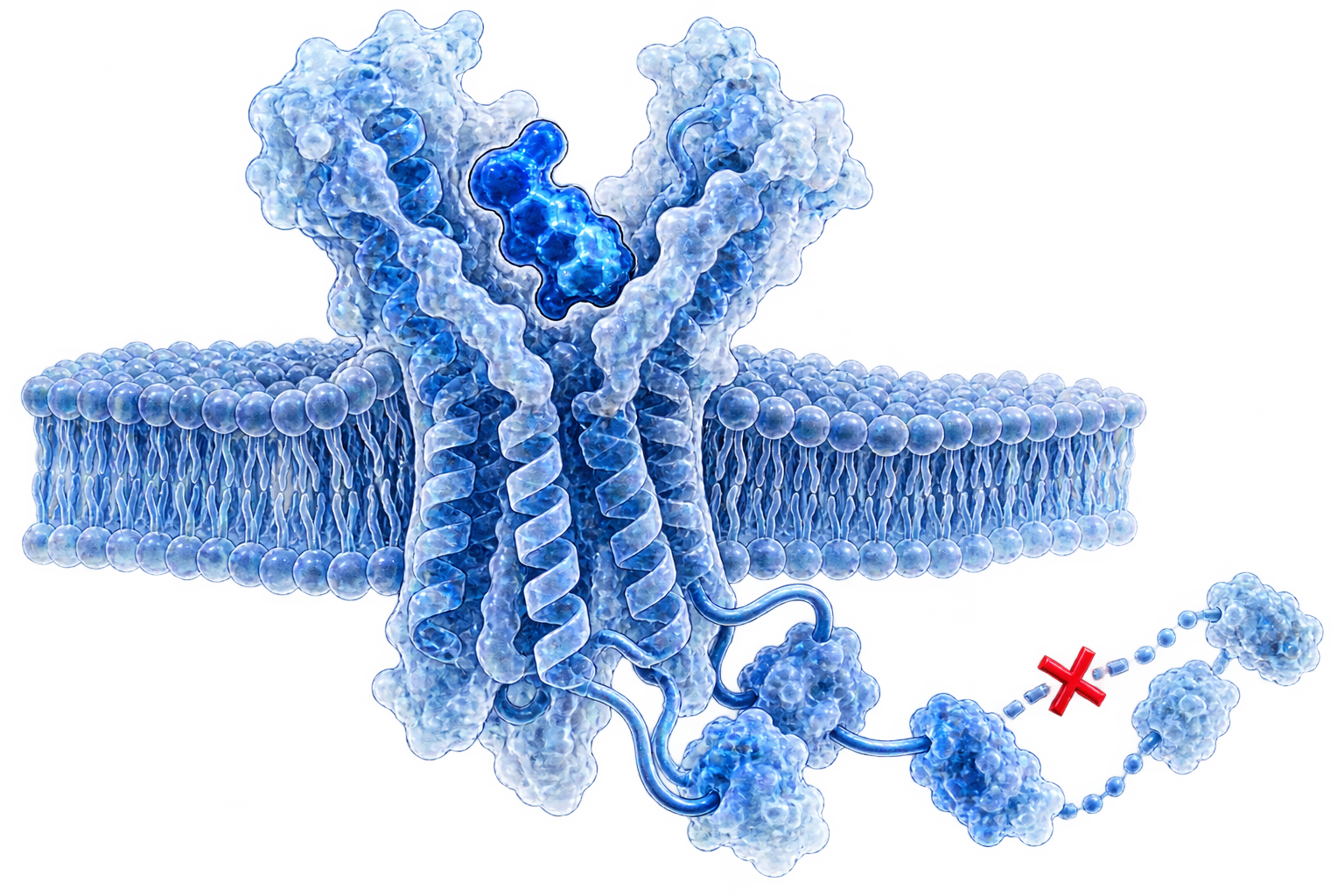
07 / Visual analysis
Cetirizine: what an H1 antihistamine changes
H1 inverse agonism explains selected symptom relief. Drowsiness and rare severe itching after stopping long-term use are reported adverse effects.
Read study 5 min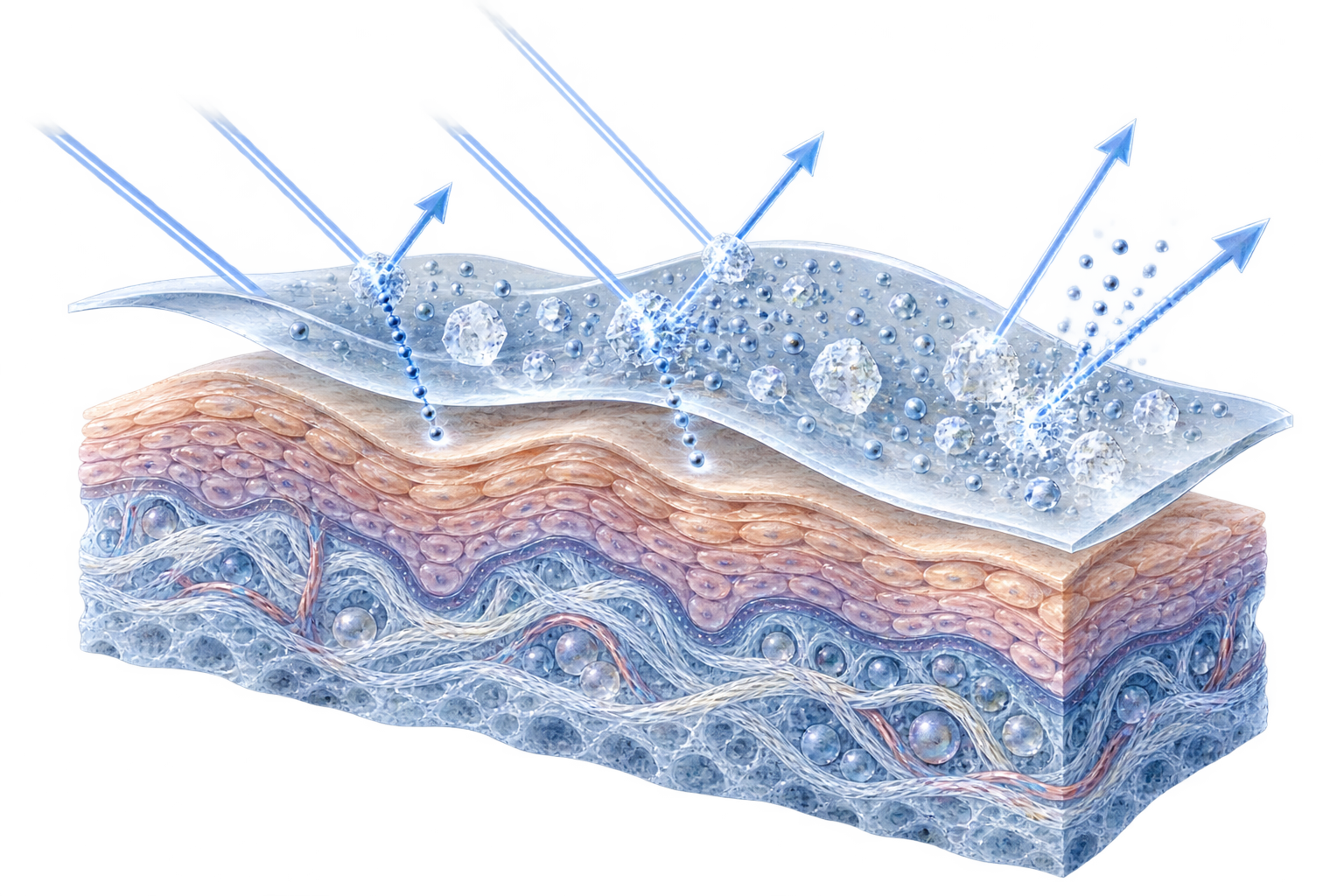
08 / Visual analysis
Sunscreen: SPF, coverage and protection
SPF measures a standardized sunburn-protection ratio. Filter properties, film coverage and exposure conditions affect measured performance.
Read study 6 min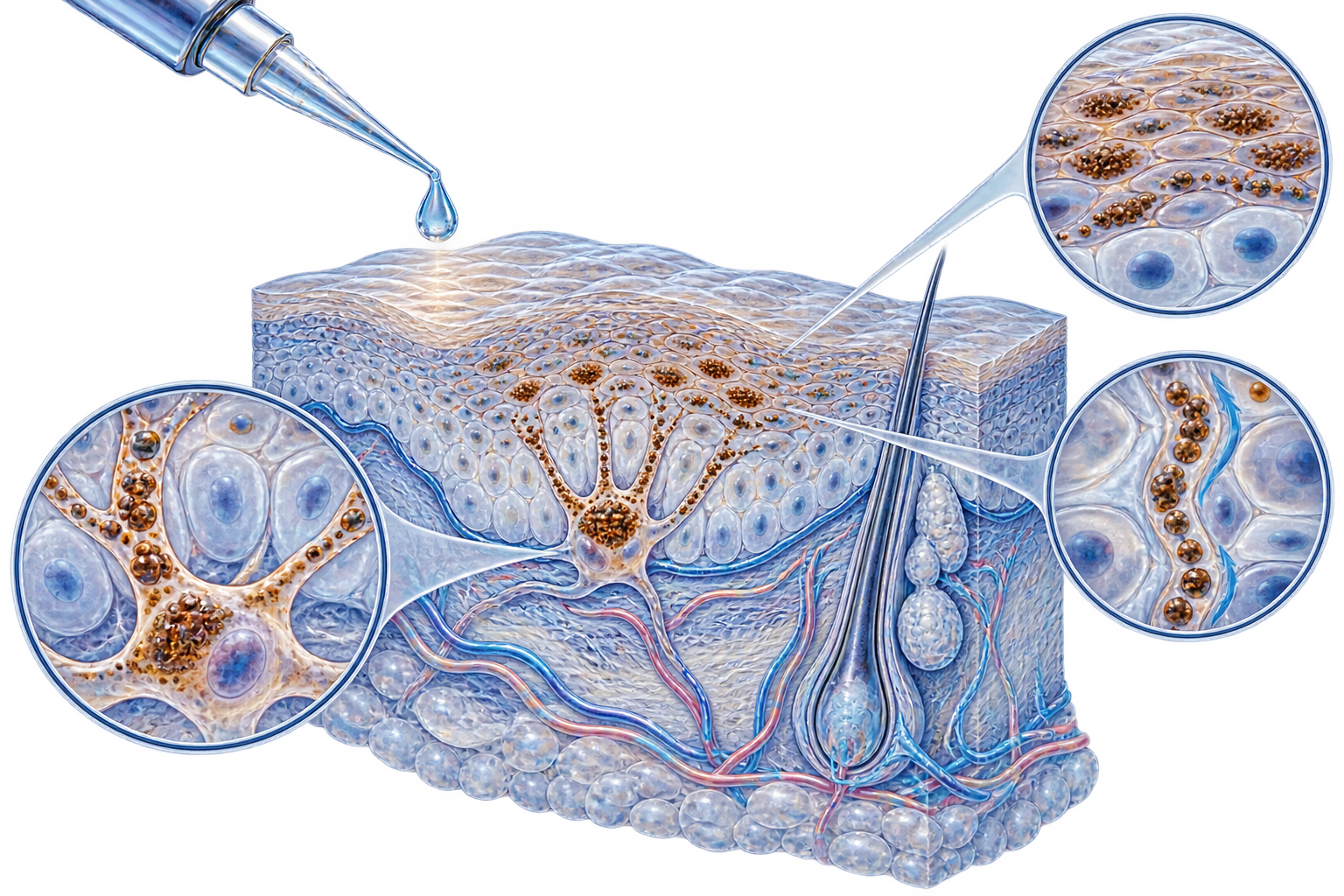
09 / Visual analysis
Dark-spot serums: mechanisms and efficacy evidence
Pigment production, transfer and turnover are distinct mechanisms. Ingredient evidence does not establish that every serum affects every form of pigmentation.
Read study 5 min
10 / Visual analysis
Melatonin is a night signal. Melanin is a pigment.
Melatonin conveys circadian timing; melanin contributes pigmentation. Supplement evidence differs across sleep conditions and does not establish a skin-pigmentation effect.
Read study 5 min