
Collagen Supplementation: Breakdown, Absorption, And Efficacy
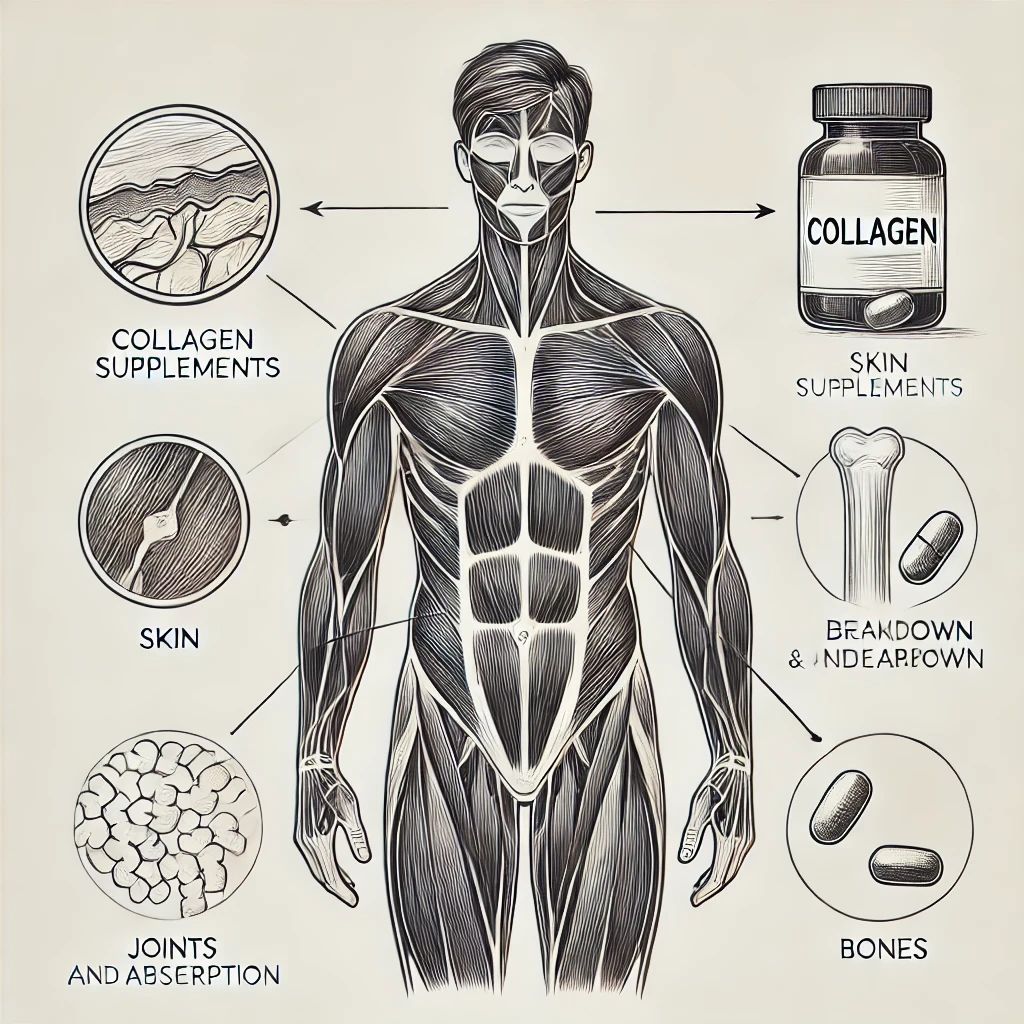
Collagen, the most abundant protein in the human body, is crucial for various bodily functions. This document explores the process of collagen breakdown and absorption, comparing the efficacy of collagen supplements to a normal diet rich in collagen-supporting nutrients.
Mar 18, 2024
I. Introduction
Collagen, the most abundant protein in the human body, is crucial for various bodily functions. This document explores the process of collagen breakdown and absorption, comparing the efficacy of collagen supplements to a normal diet rich in collagen-supporting nutrients.
II. Collagen Breakdown And Absorption Process
Initial Breakdown In The Digestive System
- Stomach acid and pepsin begin breaking down collagen into smaller peptides.
- Further breakdown occurs in the small intestine by pancreatic enzymes.
Resulting Components
- Di- and tri-peptides (short chains of amino acids).
- Free amino acids (primarily glycine, proline, and hydroxyproline).
Absorption Into The Bloodstream
- Small peptides and free amino acids are absorbed through the intestinal walls.
- Enter the bloodstream via active transport and diffusion.
Distribution And Utilization
- Circulate throughout the body in the bloodstream.
- Can be used as building blocks for various proteins, including collagen.
III. Body's Use Of Absorbed Collagen Components
Protein Synthesis
- Body uses absorbed amino acids and peptides for general protein synthesis.
- This includes, but is not limited to, collagen production.
Collagen Production Process
- Fibroblasts in connective tissues use available amino acids to produce new collagen.
- This process is not specific to collagen derived from supplements.
Non-specific Usage
- Absorbed components can be used for various bodily functions, not just collagen production.
- Body doesn't differentiate between sources of these building blocks.
IV. Comparison: Collagen Supplements Vs. Normal Diet
Normal Diet Components
- Protein-rich foods provide necessary amino acids.
- Nutrients like vitamin C, zinc, and copper support collagen synthesis.
Potential Advantages Of Collagen Supplements
- Concentrated source of collagen-specific amino acids.
- May provide higher amounts of hydroxyproline, which is less common in other proteins.
- Some studies suggest improved bioavailability of hydrolyzed collagen peptides.
Limitations Of Supplements
- Body breaks down collagen supplements similarly to other proteins.
- No guarantee that supplemental collagen will be used specifically for collagen production.
V. Scientific Evidence On Supplement Efficacy
Positive Findings
- Some studies show improvements in skin elasticity and hydration.
- Potential benefits for joint health in certain conditions.
Conflicting Results
- Not all studies demonstrate clear advantages over a balanced diet.
- Individual responses can vary significantly.
Ongoing Research
- Investigating potential signaling effects of specific collagen peptides.
- Exploring differences between various types of collagen supplements.
VI. Factors Influencing Efficacy
Individual Variability
- Age, overall health, and existing collagen levels affect outcomes.
- Genetic factors may influence collagen production and breakdown.
Digestive Health
- Efficiency of protein breakdown and absorption varies among individuals.
- Gut health can impact the utilization of both supplements and dietary proteins.
Overall Nutritional Status
- Presence of co-factors (vitamins and minerals) affects collagen synthesis.
- A balanced diet may provide these co-factors more effectively than supplements alone.
VII. Conclusion
While collagen supplements provide a concentrated source of collagen-specific amino acids, the body ultimately breaks them down similarly to other protein sources. The potential advantage of supplements lies in their high concentration of these specific building blocks and possibly enhanced bioavailability. However, a well-balanced diet rich in protein and collagen-supporting nutrients can also provide the necessary components for collagen synthesis.
The decision to use collagen supplements should be based on individual needs, dietary habits, and overall health goals. While some may benefit from the convenience and concentration of supplements, others may achieve similar results through a nutrient-rich diet. As research continues, our understanding of the specific benefits and mechanisms of collagen supplementationmay evolve.