
The Primordial Particle Universe: A Simulated Cosmos From A Planck Cube Seed
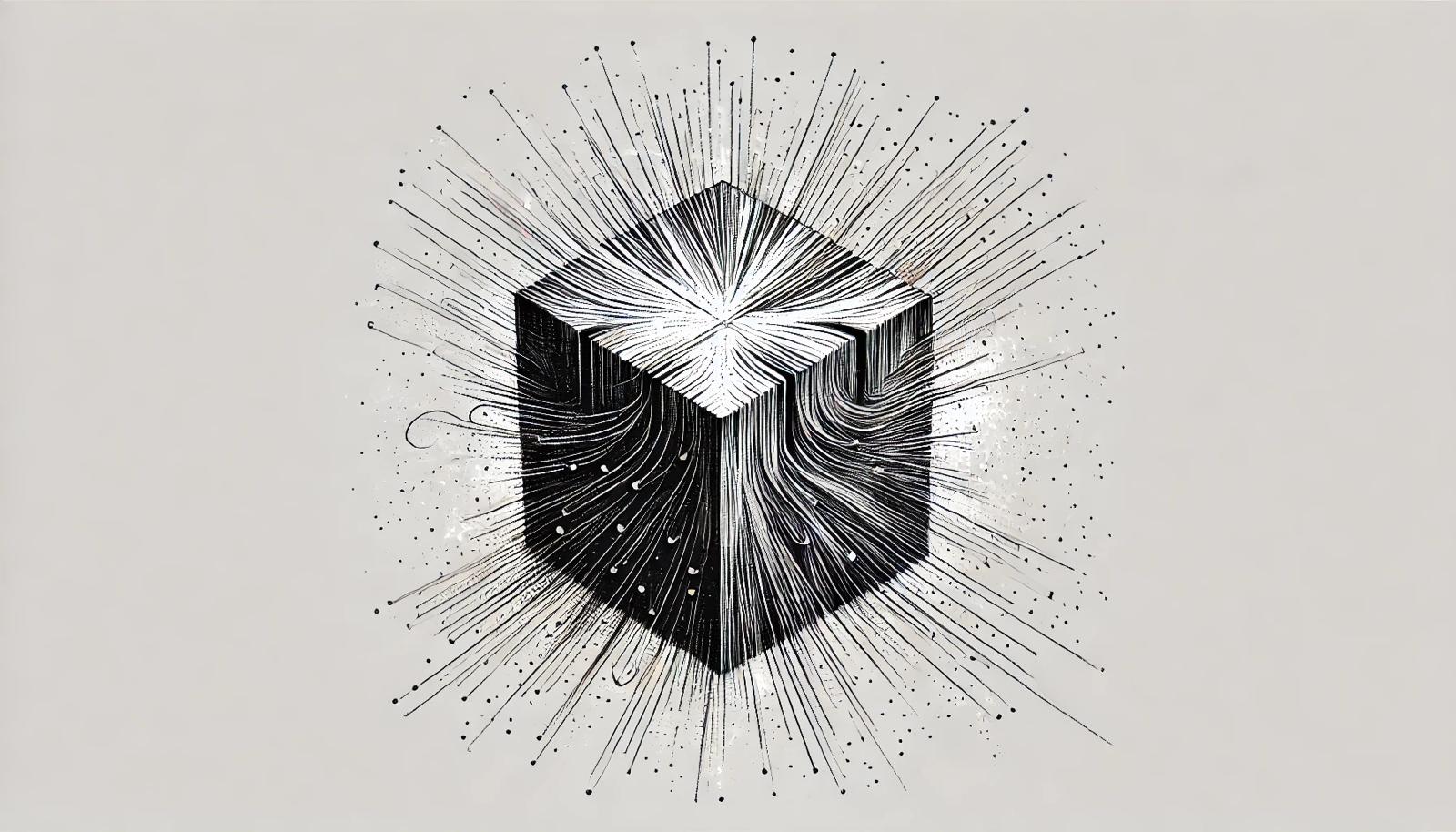
This document explores a speculative theory about the origin of our universe as a simulation. In this concept, the universe begins with a single Planck cube containing a fundamental type of particle or energy entity, which then expands and evolves to form the cosmos we observe today.
May 08, 2024
I. Introduction
This document explores a speculative theory about the origin of our universe as a simulation. In this concept, the universe begins with a single Planck cube containing a fundamental type of particle or energy entity, which then expands and evolves to form the cosmos we observe today.
II. The Theory
The Primordial Particle UniverseTheory proposes that:
- Our universe is a simulation created by an advanced intelligence.
- The simulation begins with a single Planck cube (the smallest possible unit of space).
- This cube contains only one type of fundamental particle or energy entity.
- At the start of the simulation, these particles expand outward, eventually forming all matter and energy in the universe.
III. Key Concepts
Planck Cube
A cube with sides equal to the Planck length (approximately 1.616 × 10^-35 meters).
Primordial Particle
A hypothetical, fundamental particle or energy entity from which all other particles and forces emerge.
Simulation Hypothesis
The idea that our reality is an artificial simulation created by a more advanced intelligence.
Emergent Physics
The concept that complex physical laws and particles can emerge from simpler, more fundamental rules and entities.
IV. The Process
Initial State
A single Planck cube containing numerous identical primordial particles. This represents the state of the simulation at time t=0.
Expansion
Upon activation of the simulation, the cube's contents begin to expand rapidly. This expansion is analogous to the inflationary period in current Big Bang cosmology.
Particle Evolution
As the simulation progresses, the primordial particles interact and combine. These interactions give rise to the various fundamental particles we observe today (quarks, leptons, bosons).
Emergence of Forces
The fundamental forces (strong nuclear, weak nuclear, electromagnetic, and gravity) emerge from the interactions of the evolving particles.
Matter Formation
As the universe cools and expands, particles combine to form atoms, beginning with hydrogen and helium. Over time, stars and galaxies form through gravitational attraction.
V. Advantages of This Model
Simplicity
- Starts with a single type of particle, allowing for a simple initial state.
- Complexity emerges from simple rules, a common feature in simulations.
Computational Efficiency
- Beginning with a small, uniform state is computationally efficient.
- Allows for the gradual computation of the universe as it expands.
Flexibility in Physics
- As a simulation, the "laws of physics" can be defined by the creator.
- Avoids conflicts with known physics by positing a pre-physics state.
Explanation for Universal Constants
- Fundamental constants could be parameters set at the start of the simulation.
Unified Origin
- Provides a single origin for all matter, energy, and forces in the universe.
Alignment with Inflationary Theory
- The rapid initial expansion aligns with cosmic inflation theories.
VI. Challenges and Considerations
Emergence of Complexity
Explaining how diverse particles and forces emerge from a single particle type is challenging.
Conservation Laws
The model needs to account for the conservation of energy and other fundamental quantities.
Quantum Mechanics
The transition from a classical initial state to quantumbehavior needs explanation.
Lack of Empirical Evidence
As a speculative theory, it currently lacks observational support.
Simulation Architecture
Questions arise about the nature of the simulation substrate and the capabilities of the creators.
Philosophical Implications
Raises questions about the nature of reality, free will, and the purpose of existence.
VII. Implications if True
If the Primordial Particle Universe Theory were true:
- Our reality would be a constructed simulation.
- All matter and energy would have a single, unified origin.
- The laws of physics would be emergent properties rather than fundamental truths.
- There might exist a "meta-universe" where the simulation creators reside.
- The initial conditions of our universe would be intentionally set rather than random.
VIII. Conclusion
The Primordial Particle Universe Theory presents an intriguing speculative model for a simulated cosmos. It offers a unique perspective on the origin and nature of our universe, combining elements of the simulation hypothesiswith concepts from cosmology and particle physics.
While this theory provides an elegant and computationally plausible starting point for a simulated universe, it remains highly speculative. It raises as many questions as it answers, particularly regarding the emergence of the complex physics we observe from a simple starting point.
This concept serves as a fascinating thought experiment, challenging our understanding of reality, computation, and the cosmos. It encourages us to think creatively about the nature of our universe and the possibilities that lie beyond our current knowledge.
As with all such speculative theories, it underscores the vast amount we have yet to learn about the origin and fundamental nature of our universe, inspiring continued exploration and questioning in science and philosophy.